October 20, 2026
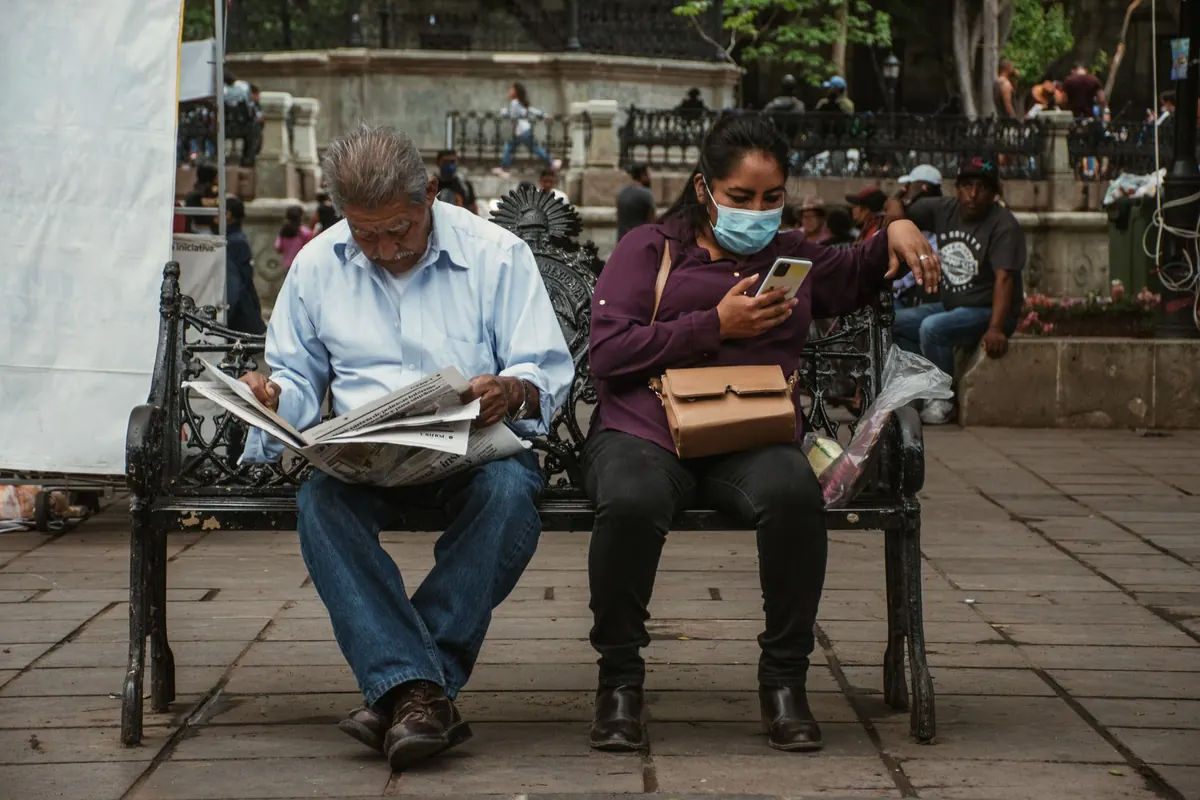
Someone in the neighborhood group chat says the water will be cut off tomorrow from eight until four. Someone else forwards a photo of a police car parked outside the primary school. Within ten minutes, three people have rung the school office and one has started filling every bucket in the house. By lunchtime it turns out the water notice was from a repair last spring, and the police car was there for a cycle race. Nobody meant any harm. It still cost everyone a morning.
Forwarding a tip is not the same as confirming one. The gap between the two is where most local confusion lives, and it is a gap you can close in a few minutes with a routine you repeat until it becomes habit.
Start with the person, not the post
Before you look at the claim, look at who is making it. A message becomes much easier to judge once you know whether it came from someone standing at the scene, someone repeating a neighbor, or someone whose name quietly fell off the chain three forwards ago.
Ask a simple question in the thread, in plain language: who saw this? Not "is this true?", which invites opinion, but "who saw it, and where were they?" If nobody can point to a person who was there, or to an office that actually said it, you are holding a rumor with good manners. Confidence is not evidence. Some of the most certain messages that cross a neighborhood turn out to be wrong, and some of the vaguest turn out to be right.
Three quick questions sort most tips:
- Is there a name attached? A person, a role, an office, a shop. "A friend of a friend" tells you nothing.
- Could this person actually know? A resident on the street can tell you a road is blocked. Only the utility can tell you when the water returns.
- Is the source still attached? Screenshots and voice notes lose the original poster fast. If the trail ends at "I got it from someone", treat it as unverified.
Check the date before you check the details
Old notices are the most common source of local false alarms, and they are almost never malicious. A closure notice, a boil-water warning, a missing pet poster, a photo of a burst pipe: all of these get saved, rediscovered, and sent around months or years later with the timestamp of the forward rather than the date of the event.
So look for the date printed on the notice itself. Screenshots often strip it. Words like tomorrow, this weekend and next week are a warning sign, not because they are wrong, but because they cannot age. A message that says "tomorrow" with no date attached has no expiry and will keep circulating long after the event is over.
If you cannot find a date, say so out loud in the thread: "No date on this one, does anyone know when it was?" That single sentence stops more bad forwards than a paragraph of argument.
Photos and videos need a place and a time
An image feels like proof. It is proof of one thing only: that somewhere, at some point, something looked like this. Getting from that to "this is our street, this morning" takes a few checks.
Look at the edges of the frame
Shop signs, house numbers, a church tower, the shape of the hills behind the roofs, road markings, the language on a poster. A photo shared as "our piazza" that shows a mountain ridge you have never seen from your own piazza is telling you something. So is a summer scene with bare trees, or bright sunlight on a day the town spent under cloud.
Reverse-search the image
Right-click or long-press the picture and search for it with an image tool. You are not looking for a verdict, just for an earlier appearance. If the same photo turns up in a news story from another region, you have your answer, politely worded.
Watch the clip before you trust the caption
With video, listen with the sound on. Spoken language, accents, sirens, license plates, street signs and the height of the buildings all narrow the location. A clip that has been clipped, sped up or re-captioned deserves extra caution, because the caption is the part that travels and the footage is the part people stop watching.
Compare it with a primary source
Primary means the office or organization that would actually have to act. For most local claims that means the town hall website or its verified social page, the utility's outage or works page, the school office, the local police non-emergency line, the water authority, or the local paper that employs someone to ring and check.
Two habits matter here. First, note the time of the last update on the official page; a notice from this morning is worth far more than one from three weeks ago. Second, resist treating silence as proof. "The town hall hasn't said anything" is not the same as "the town hall denies it". Offices are slow, especially at weekends, and a lack of comment is just a lack of comment.
If the tip touches on health, money or anything legal, keep your forwarding to the official guidance and suggest the person ask a professional who knows their situation. You are not the one to interpret a medical warning or a benefits rule, and neither is a group chat.
Read it aloud and listen for the seams
Try reading the message as though it were being spoken to you across a table. Some claims sound reasonable in a chat window and strange out loud. The seams usually show up as a few familiar patterns:
- The unnamed authority. "They've confirmed", "sources say", "it's official" — with no office and no document.
- Manufactured urgency. "Share before it gets deleted." Real information rarely needs to be raced.
- Secret knowledge. Claims that the council, the hospital or the newspaper is hiding something, offered without a single checkable detail.
- Borrowed seriousness. A genuine photo, a real notice, or a true sentence about something else, attached to a claim it does not support.
Most local misinformation is not invented from nothing. It is a real event, stretched. A burst pipe becomes a contamination scare; a police presence becomes an incident; a rumored closure becomes a decision. Asking which part you can actually verify separates the useful half from the rest.
Pass it on without making it worse
When a tip does check out, the way you share it matters. Send the original notice or the official page rather than your screenshot of it, so the next person can check too. Add the date and what you verified, in one line: "Town hall notice, posted this morning, road closed Thursday and Friday." Add what you don't know: "No word yet on the school bus."
And if you got something wrong earlier in the week, say so in the same thread where you shared it. Corrections travel more slowly than alarms; you have to put them in front of the same people who saw the original. A neighbor who corrects themselves is more useful to a community than one who is never wrong, because people keep listening to them.
A five-minute routine for the next tip
Keep it short and repeatable. Five questions, asked before you press forward:
- Who said this, and could they actually know?
- What date is on the original, rather than on the forward?
- Where and when was the photo or video taken?
- Does the town, the utility, the school or the local paper say the same thing, and when did they last update?
- Can I write one sentence that states only what I know?
If you can answer all five, share away, with the source attached. If you can't answer two or three, don't delete the message and don't argue with it. Ask the question in the thread and wait. Waiting costs nothing, and a false alarm costs a great deal: half a morning of buckets, a school office fielding calls, and a little more of the trust that makes a neighborhood group worth being in.
Photo: Jorge Acre / Pexels